Enquiries



Only 24% of Organisations Have Scaled AI. Talent Is the Reason Most Haven’t.
Article by Andy Weir
AI investment shows no sign of slowing down. According to KPMG’s latest Global Tech Report, 88% of organisations are now investing in agentic AI, and 74% say it’s already delivering measurable business value. On paper, that looks like a technology that has well and truly arrived.
Dig a little deeper, though, and a gap opens up. 68% of organisations want to reach the highest level of AI maturity by the end of 2026. Only 24% say they’re there today. And when it comes to scaling AI successfully across multiple use cases, rather than running it as a handful of isolated pilots, that figure also sits at just 24%.
So AI is being funded. It’s being talked about in every boardroom. And yet for three out of every four organisations, it still isn’t scaled.
Why the gap exists
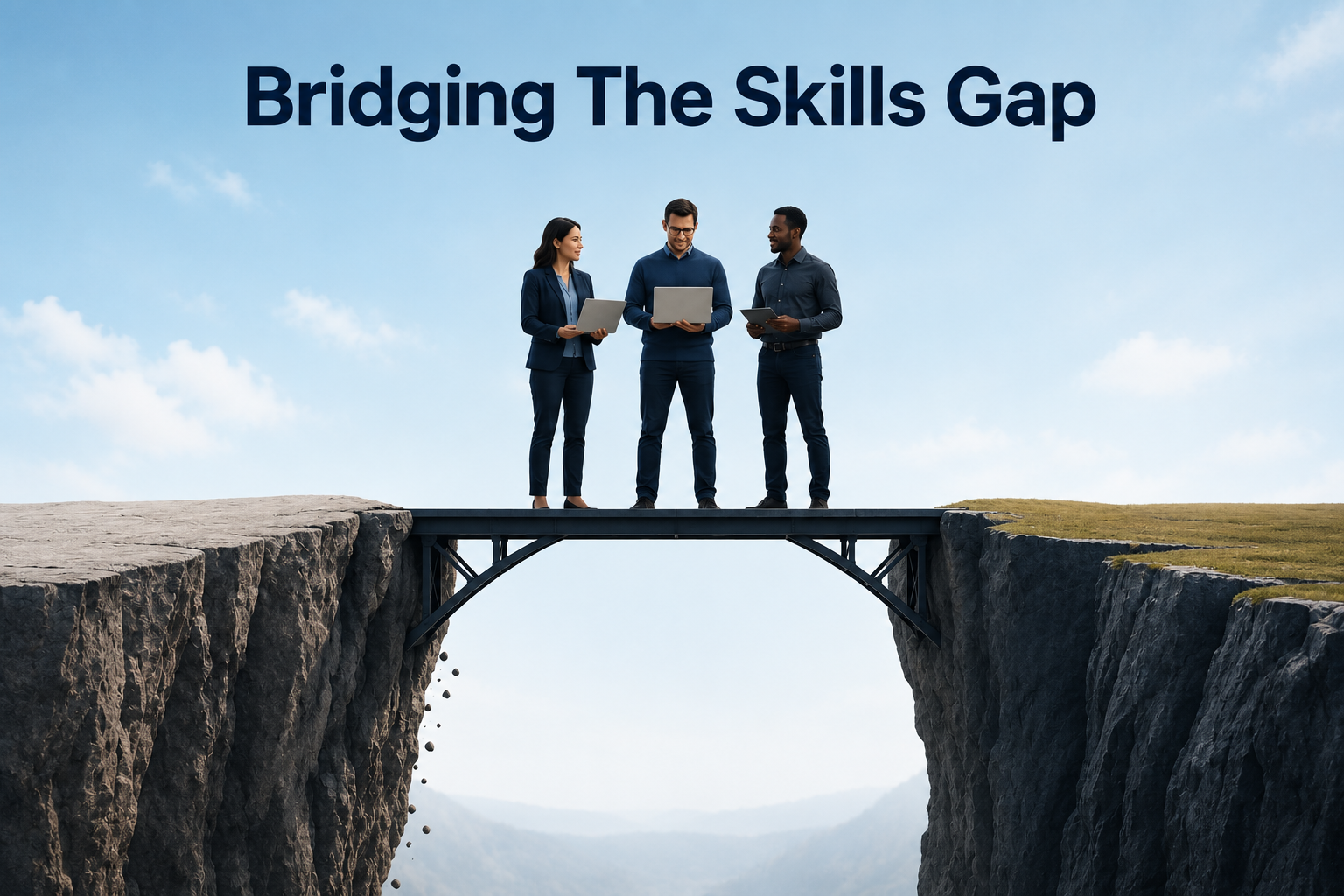
The report points to a familiar culprit: people. 53% of organisations say they lack the talent needed to fully implement their digital transformation strategy. A shortage of AI-specific skills remains one of the biggest blockers standing between a promising pilot and a genuinely embedded capability.
This tracks with what we’re seeing on the ground. Budget has rarely been the constraint for the businesses we speak to this year — engineering capacity has. It’s one thing to greenlight an AI initiative. It’s another to have the machine learning engineers, MLOps specialists, and data engineers in place to actually build, ship, and maintain it.
The organisations pulling ahead of that 24% aren’t necessarily the ones spending the most. They’re the ones who solved the talent problem first.
Build, contract, or both?
There isn’t a single right answer here, and it usually comes down to timeline and certainty.
Building a permanent internal team makes sense when AI is becoming a core, long-term part of how you operate, not a single project. It’s a bigger commitment, but it builds institutional knowledge that stays with the business.
Bringing in specialist AI contractors makes sense when you need to move now, on a specific initiative, without the lead time of a permanent hire or the long-term headcount commitment. It’s also a low-risk way to validate a use case before deciding whether it warrants a permanent team.
A blend of both is increasingly common: contract talent delivering the current priority at pace, while a smaller permanent team is built up alongside them for the long term.
None of these is inherently better. What matters is being honest about which stage of the maturity curve you’re actually on, rather than the stage you’d like to be on.
Where this leaves most organisations
If your organisation sits in the 76% that hasn’t scaled AI yet, that’s not unusual — it’s the majority. The KPMG data suggests the difference between staying there and moving into the 24% comes down less to ambition, and more to whether the engineering talent is in place to execute on it.
That’s the conversation worth having early: not “should we invest in AI,” which most organisations have already answered, but “do we have the people to actually deliver on it.”
Andy Weir is a specialist contract recruiter at Cathcart Technology, working with organisations across Scotland and the North of England to build software, data, and AI engineering teams. If you’re weighing up building internal AI capability, bringing in contract specialists, or both, get in touch.